Category Archives: life
The Swedes Have Got It Right
Almost eight years on, and even now, when I mention to people (because they ask) that I don’t eat rice, wheat, sugar, potatoes (white stuff or brown stuff – don’t be fooled, it’s all bad with white being just a bit worse), they look at me like I have grown two heads.
It’s not like this is a whim. I have read and researched material over the years and believe – without a doubt – that a diet loaded with carbohydrates is bad, bad, BAD for you. Not just for your body but for your brain. If I need to, I can cite results, research, studies and facts, ad nauseam.
In fact, I should be looking at all the carb loaders as if they had grown two heads. All you need to do is see the awful evidence:

Horrifying, Fast-Paced Increase in Obesity in the United States
:
How I wish more of the world would learn from Sweden!
Sweden (and yes, I mean the government) today preaches a “LCHF” diet for good health. LCHF = Low Carb, High Fat. Here’s a great article on the topic:
Sweden Becomes First Western Nation to Reject Low-fat Diet Dogma in Favor of Low-carb High-fat Nutrition
And this was not a whim either.
Sweden took this huge step forward based on the results of a commission that looked at over 16,000 studies and confirmed science that has been around for many years (but largely ignored by the rest of the world).
Here’s a quote from Professor Fredrik Nyström, one of the committee members in Sweden :
“I’ve been working with this for so long. It feels great to have this scientific report, and that the skepticism towards low-carb diets among my colleagues has disappeared during the course of the work.
When all recent scientific studies are lined up the result is indisputable: our deep-seated fear of fat is completely unfounded. You don’t get fat from fatty foods, just as you don’t get atherosclerosis from calcium or turn green from green vegetables.”
After two years of studying the issue, the Swedish expert committee published their results and conclusion in September 2013. Lucky for the Swedes, this report from the Swedish Council on Health Technology Assessment is likely to be the basis for future dietary guidelines for obesity treatment within the Swedish health care system.
How about the rest of the world? Here are two choices for us –
1. The status quo – continue your normal high-carb, low-fat diet and face the consequences with your health
2. Question it and adopt a more scientific and proven method to protect your body and your brain
If you choose not to be stuck in a cave and opt for #2, I recommend that you start here, with the Swedes – read about the expert committee, their recommendation and the rationale behind it.
Once you are more or less convinced of the evidence, you might want to traverse over here: Low Carb, High Fat for Beginners. This is an excellent, excellent site!
There are other forums and resources out there but I chose to stick with the Swedes for now. They are brave and smart enough to turn all the usual suspects and wrong assumptions on their head, and lead the world towards a healthy revolution.
Finally, here’s a point made by the Diet Doctor (Swedish, of course):
It took millions of years for the human revolution to take place. But that last step below – the arrival of the modern obesity epidemic did not take millions of years. It happened barely in a blink of the eye, relatively speaking.
Get informed, click on the picture below to find out why. Surely, you are interested? Surely.

Alas, the arrival of modern obesity…much too quickly
:
:
The New DUI
I’m not exactly a timid driver. Exactly. Early in the morning (very early!), if you see a car tailgating the slow moving vehicles on the left lane of Route 400 heading North, then there’s a good chance that it’s moi.
Unlike in Europe, where it is normal practice for the left lane to be used as a passing lane for fast vehicles only, in the good old US of A, that concept never quite took root. So, we have slow Mo chugging along at 55 miles per hour in the left lane – especially when I’m in a hurry. Like every darn morning. Poor slow Mo. Eventually, he moves over.
So, yes, I drive fast and often over the speed limit but when I’m driving, that’s all I’m doing. Fast but focused.
 :
:
The other day, when I was heading in the other direction, early afternoon and in broad daylight, I saw another car going fast but it was also weaving from left to right and back in its lane. I thought the driver might be intoxicated. So what if it was broad daylight? It happens. But as I passed the vehicle (of course, I passed) to avoid it’s back and forth motion, I happened to glance over. The guy had his smart phone on his lap and he was apparently reading and texting while driving.
No, no, no! You can’t do that!
Check out these scary statistics. Here’s one of the scariest:
Texting while driving makes a crash up to 23X times more likely.
It’s a big no-no for me, now more than ever after seeing some of these scary stats. The only texting you will find with me if I am driving is when I use Waze to navigate to an address that is already saved. It’s not really texting but a couple of touches to select. And even that I try to do before I start driving. That’s enough, more than enough!
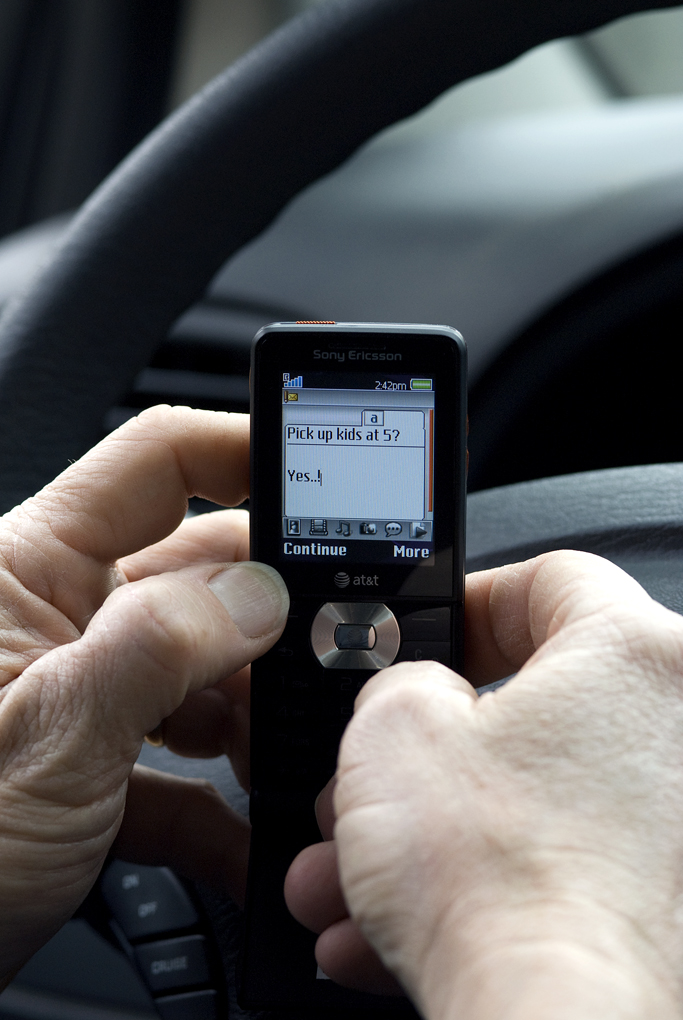 :
:
Distraction.gov is the official U.S. Government site for distracted driving. Check it out.
And according to the National Highway Traffic Safety Administration (NHTSA), texting while driving has been proven to be six times more dangerous than driving while intoxicated. Six times!
It’s time to ban, ban, BAN this!
People! Put away your darn cell phones. Unless you are in a chauffeur driven car or you are in one of Google’s driverless cars (which is apparently a mere 2 to 5 years away from reality).
Actually many states have banned texting while driving and others are on the same path.
Yet people continue doing it. What is going to take to stop? A fatal crash that involves one of your loved ones?
Stop people! Life is too short as it is.
Here’s another wake-up call (source: FCC):
- The National Highway Traffic Safety Administration reported that in 2012 driver distraction was the cause of 18 percent of all fatal crashes – with 3,328 people killed – and crashes resulting in an injury – with 421,000 people wounded.
- Forty percent of all American teens say they have been in a car when the driver used a cell phone in a way that put people in danger, according to a Pew survey.
- Eleven percent of drivers aged 18 to 20 who were involved in an automobile accident and survived admitted they were sending or receiving texts when they crashed.
- Seventy-one percent of teens and young adults say they have composed an SMS while driving.
- Seventy-eight percent of teens and young adults say they have read an SMS while driving.
- Five seconds is the average time your eyes are off the road while texting. When traveling at 55 mph, that’s enough time to cover the length of a football field blindfolded. (2009, VTTI)
There’s too much at stake here, for you and for me. You may not care but I have too many loved ones on the roads of this country every day. Any one of them could be harmed by your silly text. So, please stop.
And spread the word! This is the new DUI. Only much worse.
:
:
Photo credit:
Atlanta traffic: By Brett Weinstein from Scarsdale, NY, Atlanta, GA, London, UK (Clogged Arteries) [CC BY-SA 2.0 (http://creativecommons.org/licenses/by-sa/2.0)%5D, via Wikimedia Commons
Texting while driving: By Oregon Department of Transportation [CC BY 2.0 (http://creativecommons.org/licenses/by/2.0)%5D, via Wikimedia Commons

 The Yin and Yang of Life Anywhere