Category Archives: recommendations
I like to think I am Stoic
My journey to understanding and wanting to be Stoic began fairly recently. Perhaps it’s true that with age and wisdom, one gets more philosophical about life and living. In any case, I was fortunate to be introduced to a book called The Obstacle Is the Way by Ryan Holiday a few years ago. It literally changed my perspective about living and especially about how to deal with the lemons that life throws us.
I was enamoured enough about this book of learning that I wrote a post about it back in 2014. It taught me how to react to anything in life, good or bad. I’ve practiced what I have learnt and over time, it has become a more normal way of thinking and acting. I know people who go to see “gurus” to learn about life and living. To me, this book and everything I have read and learnt about stoicism since then has been my best guru about life.
The author based this so very easy to read book upon all of his readings of a single book himself – Meditations by the Roman emperor Marcus Aurelius. And from everything in this book, a single paragraph formed the core of this philosophy:
“THE IMPEDIMENT TO ACTION ADVANCES ACTION. WHAT STANDS IN THE WAY BECOMES THE WAY.”
— MARCUS AURELIUS
Can you read that once again and let it sink in?
Really. Sink. In.
I haven’t read Meditations but I was fortunate to get the Cliff Notes version created by a friend – he had taken the 45000 word tome and condensed it to the core principles in about 3000 words. Every word is meaningful! I am still learning. So, while I like to think that I am a Stoic, it’s fair to say that I expect to continue to learn, observe and practice. I am no more than an aspiring Stoic – and very fortunate to have discovered it in the first place.
If you think I am speaking gibberish when I talk Stoic or Stoicism, I encourage you to read this bit about what it means to be Stoic:
What Is Stoicism? A Definition & 9 Stoic Exercises To Get You Started
Ultimately, what this philosophy has taught me to do is to examine and turn every adversity I encounter, big or small, into opportunity and advantage. I try. It’s the first thing I do.
I can’t imagine anything else that can be so useful in life than this way of living – using obstacles to practice excellence.
Is it because I have had more than my fair share of failures and adversities?
Or is it simply that I am human?


Why I fast
A few years ago, I became aware of something that was being referred to as intermittent fasting (IF for short). Every now and then, I would come across something written about it. An intriguing concept for more than just weight loss, it was being promoted as a “mini” elixir for life, so I decided to dig into it. That’s how I discovered Dr. Jason Fung and his books.
Today, intermittent fasting is becoming more mainstream. I would hope that this is a result of success breeding success. There’s more serious research and as a result more serious voices advocating the health benefits of fasting. There are even fasting apps. While weight loss appears to be the primary and featured benefit, this has a ripple effect for everything from heart disease to diabetes. This is not a diet but a lifestyle which promotes a short window for eating. Most people who adopt it start with and stick to an 8 hour window during a 24 hour day which is the only window where they can eat or drink anything but water, black coffee or tea, and green tea.
In my experience, this is the easiest way of fasting. All you are doing is throwing one main meal – either breakfast or dinner – out the window. That gives you a straight 16 hour stretch with no food.
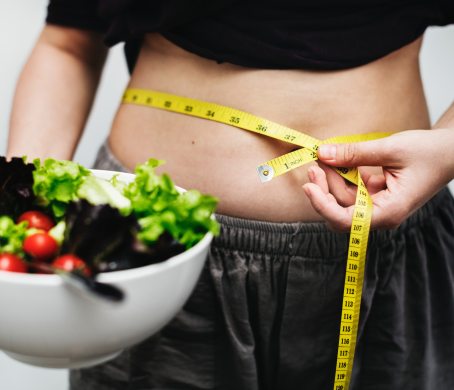 What happens to your body when you fast? Perhaps the simplest explanation is that fasting drains your body of its glucose reserves which are its main energy source from food (and why you eat). Once that happens, your body has to switch over to burning fat for fuel. This is referred to as ketosis and is the primary way that you lose fat, inches and weight.
Today there are numerous resources available for anyone who wants to try IF including entire blogs dedicated to this topic.
The key for everyone to understand is that weight loss is only one of the many benefits that can be derived from this way of living and eating. People who have no weight to lose are also adopting this lifestyle.
Take me, for example. Well, actually, don’t take me for that example! I am constantly in search of fat to burn. Unfortunately, it’s not that difficult to find! What I meant was that for me the benefits of IF are far greater than simply weight loss.
Here’s what I have personally experienced:
- Inches lost (more than weight; Likely it’s because I’m toning up and muscle is denser and weighs more than fat). I feel and look leaner (but not meaner :))
- More energy, more focus, more clarity
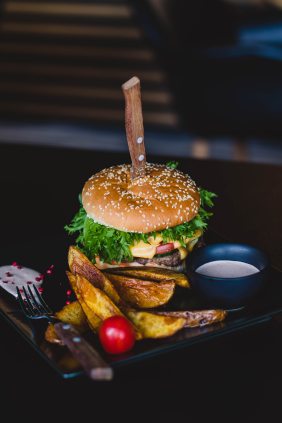
- Happier relationship with food; when I eat I don’t really restrict what I eat. I try to eat healthy, homemade whole foods, lots of fruits and veggies. But not always. Sometimes, it’s a cheeseburger and apple pie from McD’s and I love it! No more strict restriction on a type of food (carbs), more balanced eating, more balanced and happy with food!
While these are the experiences I can personally see, feel and touch, research tells me that there are other benefits that I am reaping.
Here is an excerpt from a blog focused on IF that talks about the other significant benefits:
I don’t need to lose weight. Why should I practice intermittent fasting?
Beyond weight loss, there are several benefits to intermittent fasting related to the following key health markers:
- Inflammation: Some studies have shown a reduction in inflammation– a condition linked to several chronic diseases including asthma and rheumatoid arthritis.
- Insulin Resistance: Intermittent fasting may reduce insulin resistance thus lowering the risk of type 2 diabetes.
- Brain Health: Intermittent fasting increases “brain-derived neurotrophic factor” (BDNF). High BDNF is associated with lower Alzheimer’s risk.
- Cancer: Some animal studies suggest that intermittent fasting may help prevent cancer.
- Anti-aging: Intermittent fasting has been shown to extend the lifespan of rats by as much as 83%.
- Heart Health: By reducing LDL (“lousy”) cholesterol, triglycerides, inflammation, and lowering insulin resistance, intermittent fasting can reduce the risk factors for heart disease.
- Autophagy: IF triggers autophagy – recognized as a crucial defense mechanism against malignancy, infection and neurodegenerative diseases.
I love the name of this blog – Food Can Wait!
I started this journey in March 2016 and can’t be happier. Over 3 years! I feel like I have earned the right to say that it is my lifestyle. To begin, my daily fasting method was “16:8” i.e. 16 hours of fasting and an 8 hour window where I could eat. All this meant to me was skipping breakfast which I replaced with two large cups of black coffee during the morning hours.
For anyone who thinks this is hard, that’s such a poor excuse for not starting!
Today, my normal regimen is a 23 hour fast on weekdays, Monday to Thursday, i.e. 23:1 – also known as OMAD (One Meal A Day). I thought this would be so hard and I have been pleasantly surprised as to how easy it has been. What’s funny is the “1” in “23:1” and how I experience it. I feel like I am eating for the entire hour! Like a camel. 🙂 My normal time for eating is around 5 pm on these days.
Sometimes the 23:1 fast can extend to Friday but that normally means I don’t have anything fun planned for Friday. Now, that’s rare. On weekends, I am back to 16:8. Somedays its 18:6 or 20:4 or even 14:10. But, that’s okay. This is a very forgiving lifestyle!
Your body will survive just fine without all that mindless eating. I guarantee it. And if you have any extra fat on your body, watch it burn, baby! The real question is really to your mind. Are you up for it? The first comment I hear when I try to suggest to others the benefits of IF is, “oh, that sounds really hard“. It’s not.
Ask yourself whether you want to be more healthy tomorrow than you were yesterday. And then count all those tomorrows against yesterdays. My goal for my next birthday is to be healthier then than I was 20 years ago. Is that a good goal to have or what?!! And it’s totally achievable; I feel that with the focus I’ve had on it, I am already on my way there. IF is the key solution for me – probably the most critical one, addressing the diet pillar, with the other lifestyle markers being exercise, sleep and mindfulness. It pays to care about all of them.
[Preaching conclusion:] If you don’t start, you’ll never know how easy it is, or how beneficial. And if you don’t know that, you will never have the intent to make it a lifestyle choice.
It’s all about mind over body. One life…how healthy do you want to be? You decide.


 The Yin and Yang of Life Anywhere