Powerless!
India broke a world record. And the world paid attention (rightly so). The news grabbed headlines internationally. It did not have anything to do with the Olympics. It did not even have to do with cricket. You know what that means? Even the non-Commonwealth countries got into the act and came away spellbound and amazed.
By the time you read this, I would hope that this is old news. I really hope!
India now holds the dubious record of having the largest power cut ever in the history of the world.
The power went out for two days in a row when the electrical grid went down. And on that second day which was the worst ever, more than 600 million people along great swathes of the country – the Northern and Eastern states of India were severely impacted (this is more than the entire population of EU!).
 :
:
Both Indian outages were the world’s largest by far. The next closest was a 2005 blackout that affected 100 million people in Indonesia. What a reason for ‘India Shining’ to make headlines around the world! 😦
Like I said, hopefully this is old news by the time this post goes up and that there have been no other such crippling occurrences in India since then.
There’s lots you can read about the topic so I won’t repeat it here. I thought I would focus, instead, on some of the reactions of people in and out of India.
This was a seriously massive problem but that doesn’t mean you can’t have a chuckle or two at its expense, or vent your frustration. As people in India do.
Media here (as well as citizens) had a field day. The best headline, by far, that I came upon was this from The Economic Times; it took up a huge chunk of the cover page real estate.
SuperPOWER India, RIP
BBC showcased all the Indian headlines here. Have a look.
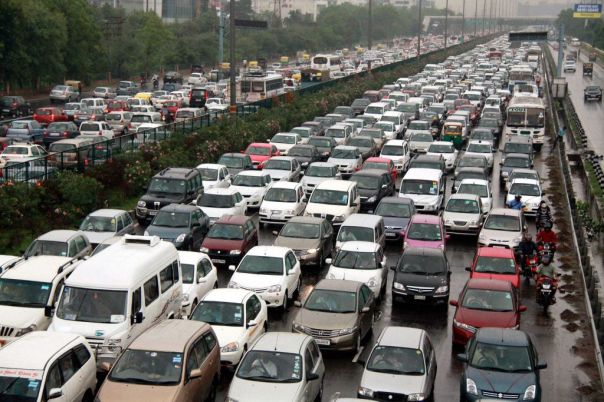
From various, random sources, I picked out some quotes and comments from Indian citizens, and a few from non-Indians too – some for their insight or anger, others for their entertainment value. But even those with humor and wit have an undercurrent of sadness and dismay about them.
“This news bring shame to India in world’s eyes … I don’t think any outside investor in a right mind can invest in India. If given the chance, even Indians would invest outside than here.”
“Delhi is powerless is a known fact. For they want only political power in UP and Centre. They are not worried about the people suffering without power for their daily routine. India will surely become superpower in 3025.”
“This awful power grid failure should act as the wake up call for the slumbering and dithering govt to reform the power sector on an urgent basis.”
“People in the know have been saying that India’s development is a sham, and is not real. The infrastructure quality is pathetic, and that the institutions are not reliable, since the country reeks of corruption in every aspect. But, the media hype was such that any attempt to suggest that development funds were being pilfered thru poor quality of delivery fell on deaf ears. Now the world can see for itself, the colossal collapse of electricity infrastructure affecting 600 million people. What better proof was required that all state governments are run in the most incompetent manner possible. Nothing about India inspires confidence – atleast not with current and future crop of political leadership.”
“While the world was waiting for India’s ‘Golden Moment’ to finally arrive, the Mother of all Blackouts happened. ‘India Shining’ now sounds like the ultimate misnomer. India needs to give up its dreams of becoming a ‘superpower’ when it cannot even provide clean drinking water, clean toilets, clean food, and now electricity to most of it’s population. Most Indians still live in poverty worse than sub-Saharan Africa.”
“Too much outsourcing is straining the grid.”
“I can not reach my customer service rep! What is de problem?”
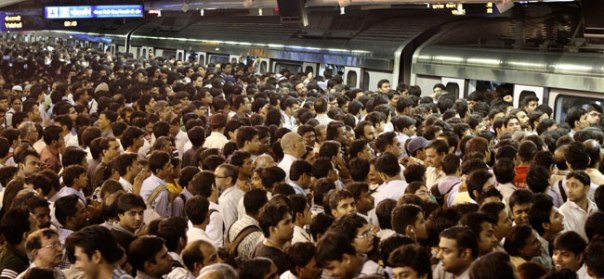
Click on picture for “Power Grid Failures a Wake-up Call for Aspiring India” from The Hindustan Times
“Our worthy power minister elevated as home minister for this feat.” [Note: The day after the massive blackout, in an unrelated power shift at the Capital, the then power minister was given the Home ministry – a much larger charter – and therefore a promotion!]
“Is it any surprise that we have reached this pass? Well this is the start and we shall see many more similar events. There used to be a method in the madness, but now the method has been lost and only madness prevails. When we see the country is being looted by all and sundry and we have no respect to a fellow human being where else do you believe this country will go. There will come a time when the people of this country will rise as they have already started doing, woe betide the politicians. I sincerely hope and believe that if this country is to progress at all we need decision makers in the Government whose first priority should be the welfare of the citizens and not how to enrich themselves and so long as we have the current crop of criminals ruling this country there is no hope at all.”
“India is the first country to invent a time-machine. It was tested successfully for 2 days. The North Indians were the privileged ones to travel twice to “Dark Ages” and back.”
“Wow, look at all the BRILLIANT ENGINEERS in India. They can’t even keep the power on.”
And the reply to this: “Engineers did their job of tripping the line when the load was high, it’s time the politicians stopped eating into the money allocated for system expansion. Otherwise, the results are evident.”
“I appeal all fellow Indians to go out in large numbers and vote AGAINST Congresss/UPA in the next general elections. Losing elections is the greatest punishment for any party”
“Lest we forget. Gujarat stood alone – with absolutely no cuts. Meanwhile it continues to export electricity to the rest of India.”
“The Gujarat example really does help to show that it is possible for all of India to have continuous power and that it’s not just a fanciful dream”
“Stop electing the wrong people.”
“China should build India’s infrastructure. A looming property bubble means a construction bust; all this capacity and nothing to do with it. India needs the infrastructure, China has the know-how.”
“Well, as far as I can tell, there actually was minimal impact on the daily lives of middle class people in Delhi. I guess the reason is that all of them have pretty robust power backup systems. Much more robust than the state owned companies. Therein lies another of “India’s big success stories” as the economist noted.”
“Government in India has been useless for the last 65 years and that should be considered as a given. In the early 90s, when Indian girls were winning beauty contests worldwide, there was this saying that India was doing well in Fashion and IT because those were not government focus areas.“
“The world’s largest democracy is now also the world’s largest ‘blackout superpower’. At one go, 1,000,000 (one billion) Indians were powerless (and speechless?). Consider that 350 million Indians have no electricity to lose and another 650 million Indians suddenly lose their electricity. A state that fails it’s people this badly is a failed state.”
“India gets a pass for its drawbacks because it is a democracy. By allowing bids from states to undermine the national electrical grid, the national government has essentially created a ready excuse for failure. Why do states even get what is in a effect a vote on a national energy policy? Let’s face it: Democracy is a difficult process and not all countries are fully capable of it. It is an absurd act of faith to believe that the costs of democratic governance are worth every possible disadvantage, and yet this has been a major tenet of Western ideology for a century or more.
Countries whose economic conditions are far more pressing than any political deficit could benefit from a realistic appraisal of available solutions rather than blindly following a path that leads to continued underdevelopment and harm. The fact that India takes pride in its democracy shouldn’t fool anyone into belief that its democratic process places it above others simply because votes are cast. Stories like these indicate the opposite: That India’s democracy is a great hindrance to its prosperity and that democracy itself may be a severe impediment to growth.“
“The political leaders always have their kind of answers to console the mass: ‘such calamities happen in developed countries as well.‘ The emerging-superpower-status is still intact,and everybody can go back to sleep.“
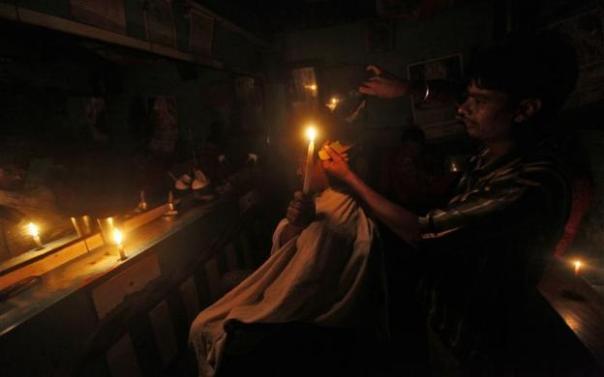
There are usually as many opinions as people. In India that translates to over a billion. But, in this case, universally the largest blame for this was cast on a highly corrupt government – and there was no boundary to this – it was at national, state and local levels.
Hard to question reality!
:
:
:
Photo Credits:
India Map: By Whoever uploaded India_states_and_union_territories_map.svg to English Wikipedia (India_states_and_union_territories_map.svg) [CC-BY-SA-1.0 (http://creativecommons.org/licenses/by-sa/1.0)%5D, via Wikimedia Commons
Charlie Rose Interviews Bill Gates

Charlie Rose is a wonderful journalist – probing and immensely curious in the well-thought out questions he asks his subjects.
So, I watched with interest all 52+ minutes of his recent (May 2012) interview of one my modern-age heros, Bill Gates.
That sounds like a long time. And it is. Think of this mad, frantic, busy, busy world that you and I live in. Spending an hour just to watch an interview? It better be good!
it was time extremely well-spent, if I do say so myself.
Why?
First, the questions matter. Charlie Rose is not shy about asking some tough and many insightful ones. He makes the whole interview fly by.
Second, this is recent and therefore timely. You are not watching an interview from 3 years ago where so much is outdated and old news. This interview is from a mere couple of months ago.
Last but certainly not least – Bill Gates. This is a man whose personal knowledge database is expansive on a bunch of worldly topics. In addition to that, he has such credibility that even his opinions are to be savored and contemplated. What more can one say about Bill Gates that has not been said before?
In any case, what else could I have been doing during this time? It was after working hours, so I could have been watching the idiot box, gone to the movies (with a highly optimistic 25% hit rate of selecting something that would entertain or educate), read a book (definitely a higher hit rate here, but hey, I’ve picked some losers in my time)…so yes, for me, this was truly worth it!
The Interview
With two high-IQ, highly credible individuals who are so darned interesting, I knew that I had a winner on my hands and I was not disappointed. Not even a bit.
Even more interesting, quite a bit of the focus of the interview was on India. It is incredible how much Bill Gates understands about this country, and how knowledgeable he is about the present conditions, the opportunities and challenges at work here.
He also spends a lot of time answering Rose’s questions about the similarities and differences between China and India.
You can catch the complete interview here. You will, won’t you? You must!
 Yes, I know your time is very valuable, so to help you decide, here are some high points, paraphrased from Bill Gates’ answers and captured from the interview (with my notes in italics below) –
- “India is jealous of China.” (I didn’t think people noticed…)
- “There is inter-state jealousy in India, which actually helps our efforts.”
- “In terms of innovation and a culture of innovation, China leads India.”
- “China leads India in research.”
- “An area where India leads China is in software engineers.” (Note: It’s the only area he mentioned).
- “It is hard for India to catch-up.”
- “Both countries looked at the U.S. and copied their capitalist market structures.”
- “India’s reforms really helped. Every time they have reforms, India gets growth from them.”
- “While China is not a democracy (often quoted as a disadvantage over India), there really are no restrictions on inventions there – scientific and engineering domains.”
- “Corruption exists. We need systems that trace the corruption in order to eliminate it. Systems like digital currencies (which has been successful in Kenya), for example.” (This may be the only viable solution for the corruption scourge…not Anna Hazare).
- “The Foundation has gained a lot of credibility in India.” (and is doing remarkable work!)
- “We want to work more on agriculture and how scientific innovation can make a difference there, and therefore on children’s lives.”
- “The US clearly leads all countries in the world in terms of philanthropy.”
- “Some business leaders in India are coming together to talk about it. At least they have committed to meet once a year to discuss it. That’s progress.”
- “Azim Premji is one good example of a philanthropist in India.”
- I feel incredibly good about (the eradication) of polio. The last case in India was in January 2011. The last frontiers to make progress are Pakistan, Afghanistan and Nigeria.
- We must make similar progress in malaria and we can.
Switching subjects to software and Microsoft (at ~32:00 mins), and his personal goals and objectives (this is really, really interesting too!), he spoke about:
- Tablet PCs and his excitement about Microsoft Surface (I feel it too, Bill!)
- The competition and the software industry giants today.
- Microsoft (Bing) + Facebook against Google
- His role at Microsoft
- More about Google versus Bing, and why he is not jealous of the success of other software companies today.
And finally, the (awesome!) goals that he would like to achieve in life, such as:
- There are 8 million children who die every year. With the availability of vaccinations, Bill Gates would like to reduce that number to less than 2 million in his lifetime
- Changing education so that it allows kids to explore their curiosity (what a great concept!)
- Availability of food for children of the world- working with farmers to ensure that it is adequate and available


 The Yin and Yang of Life Anywhere