Blog Archives
Hey Kid, do you plan to return from America?
First, a plug for Economic & Political Weekly (EPW) published in Mumbai. Known for its bold and independent viewpoint, and in depth research and analysis, every week it brings together the writings of academics, economists, political activists and social scientists. I encourage you to learn more about EPW here (even as I make myself the promise to read it more regularly for its unique insight and opinion). According to Outlook India, “The government usually reacts to most newspaper stories and editorials, but the EPW is in another bracket altogether. Its editorials go verbatim into government reports”.
Now, a plug for C. Ramanohar Reddy, EPW’s current editor. In 2007, Outlook India named him to The Alternative Power List of 25 People Who Will Never Make it to the Power List. The subtext of this list was: Thinking change in India is a thankless task. A few who are sticking it out for the greater common good. Be sure to check out the rest of this awesome list. (And oh yeah, it’s also pretty neat to be able to say that I happen to know him).

Carnegie Mellon University, Pittsburgh, PA, USA
This post is a result of reading an article published in EPW on May 21st : Will They Return? Indian Students in the United States. Many noteworthy points and specifics are included in the article. I merely present some interesting “macro-statistics” here.
First, it is based on a recent survey done with 1000 current and past Indian graduate students in the US. The core question was to determine whether they plan to return to India, and if so (or if not), what their primary reasons for doing so (or not) were. Note that 85% of the respondents were under 30 and 73% were male.
Interesting survey, wouldn’t you say? Would you venture a guess as to what some of their answers were? Read on below.
Here are the high-level results from this survey –
- The majority of the respondents, a whopping 74%, plan to return to India eventually (or had already done so)
- 53% of the total sample planned to get work experience in the U.S.
- Singles were less likely to return than married respondents
- Over 75% wanted to return to jobs in the private sector; far fewer in public sector or politics
- Most significant reasons for desire to return to India were:
- Family
- Desire to give back to motherland
- Most significant deterrents to returning to India
- Corruption
- Red tape
- Academic work environment
[Do read more about this survey and the reasons for it here. I have merely covered a few of the highlights].

2010 BCS Championship Game; University of Alabama versus U-Texas
What surprised me the most was the high percentage of people thinking of returning to India. In the “good old days” – I would say from the ’60s through to the early 2000s, many Indians who were based in the land of opportunity talked about returning, but they never did anything about it. To me, it appeared to be more of an elusive and idealistic dream than a goal. Yes, of course, I know folks who returned (family being the primary reason why), but they were few and far between.
Now, curiously, it is trending in quite a different direction, at least amongst the college-going crowd.
P.S. My non-scientific prediction is that if a similar survey were given today to Indians who have been living/working in the US for say, more than 10 years, the majority would answer that they do not intend to return, except to visit.
Your thoughts?
Photo of CMU:By Persage (Own work) [Public domain], via Wikimedia Commons
Football Photo By Bband11th (Own work) [CC-BY-SA-3.0 (www.creativecommons.org/licenses/by-sa/3.0) or GFDL (www.gnu.org/copyleft/fdl.html)], via Wikimedia Commons
What’s more Basic than Food?
The answer to that question is Not Much. And this fact is brought closer to home than ever, when you live in or experience India. If you have not yet reached a numbing acceptance about what surrounds you here, you will see the abject hunger of too many human beings – virtually anywhere you look in this country.
Which brings us to some light at the end of the tunnel. The Government of India is in the final stages of drafting a bill for the Food Security Act with implementation set to begin in phases, as early as next year. This bill when turned into law will make access to food a constitutional right for the citizens of India. That’s a giant of an objective! And, about time, wouldn’t you say?
In fact, the National Food Security Act 2011 is touted as being the most expansive action being taken by the current government. This is a laudable effort indeed. It is becoming known as the mother of all welfare schemes by providing free and subsidized food to large swathes of the population.
In order to establish which Indians would receive food subsidies, it is also important to classify people using some logic. One such means is to determine what it means to be below the poverty line (BPL). So, the Planning Commission recently advised the Cabinet that any urban dweller making Rs.20 per day or a rural person who makes Rs.15 per day should be categorized as being BPL. Those numbers converted to USD today are roughly $0.44 and $0.33 (income per day) respectively!
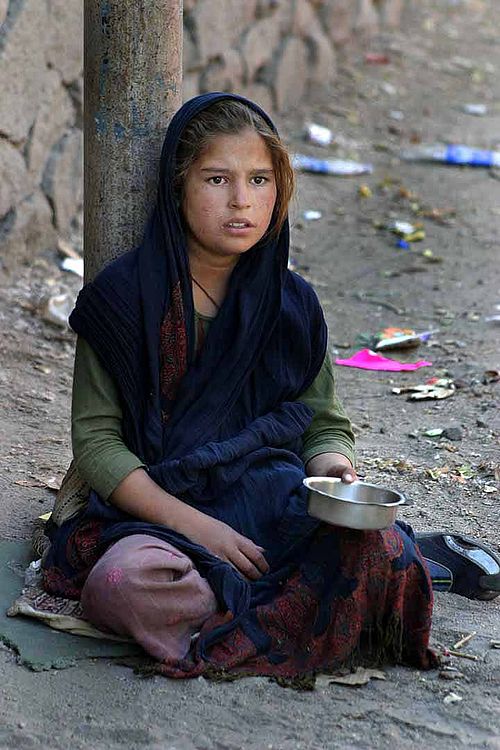
But, that is setting the bar too low! This eliminates masses of people who are in fact very poor and truly need affordable or free food from getting it. Truly bad news!
Here is the reaction of some such people in this wonderful article from Tehalka. The author, tongue in cheek, calls it the new Fortune list where several “rich” Indians (above the ridiculous new poverty line, anyway) respond to the BPL. I hope for good news soon that eliminates such flaws from the upcoming legislation and eventually its implementation.Input is being sought from states and the Supreme Court on addressing various challenges this initiative faces before finalizing the bill.
Key areas that need to be addressed include: food distribution, transparency, corruption, red tape, mismanagement, middle-management – ultimately, is the food reaching all the people it needs to?
In reaction to the bill, numerous leading Indian economists from around the world wrote this joint open letter to Ms. Sonia Gandhi (it was printed in The Economic Times). Truly worth reading, it urges her to adopt specific recommendations particularly about who it covers as well as how the food should be distributed .
Let me repeat, the whole idea of the country wanting to ensure that no citizen goes hungry is truly commendable. It would be great if they would take this commendable goal and turn it into a commendable initiative of excellent execution. It should avoid, at all costs, becoming a half-baked, compromised set of actions that invite well-deserved criticism and censure, while not solving the problem it was designed to address.
If I sound cynical, it is only because current and past governments have a legacy of screwing things up so that the final product does not bear much resemblance to the original objective. This one is such a great objective*, with numerous, overwhelming benefits for the country and its citizens; I am sure that I am not alone in feeling overly apprehensive about the potential for compromise and flawed execution. I just hope that the Government of India can get it right!
:
* btw, I say this is a great objective, even knowing that there is an ulterior political motive of buying votes from the masses with food. Because, ultimately, if done correctly, it really will help the people of this country.
:
Photo: By Steve Evans (Flickr) [CC-BY-2.0 (www.creativecommons.org/licenses/by/2.0)], via Wikimedia Commons

 The Yin and Yang of Life Anywhere