Monthly Archives: June 2011
Tehelka’s take: The most valuable politician in India
A few days after I posted my perspective on Bihar and Nitish Kumar, Tehelka published an opinion piece titled “The most valuable politician in India“. This write-up is as interesting as it sounds.
The article examined the leading national and state level politicians of current times – less than twenty people in all, from the PM, Mr. Manmohan Singh, to Sonia and Rahul Gandhi, to state bureaucrats such as Omar Abdullah and Narendra Modi. Resulting in a brief paragraph about each individual who was reviewed and analyzed, it describes why each of them matters in Indian politics today, and concluded with naming “perhaps the most valuable politician in India today“.
It’s worth a read – whether you are from India, in India, an expat or just an interested party looking on.
Let me reiterate – it’s really worth a read – for an update and opinion on the contemporary breed of politicians in India who are relevant today, and to learn why the author thinks so.
Allow me to also play spoiler, though (sorry, I simply can’t help it!). Here’s how the article concludes, and I quote:
:
“… Nitish Kumar is perhaps the most valuable politician in India because of his cool approach to crippling problems. Nitish Kumar is almost unbelievable in Bihar, thrashing opponents, making integrity attractive and making some very important policies like the bill on corrupt officers and their assets.
You can sense the relief in large parts of Bihar because of him. New Delhi learns much from him and he is probably the best bet, acceptable to everyone at the moment.”
:
“…making integrity attractive…” – don’t you just love that? Especially when referring to a politician (in any country)!
:

Bihar Chief Minister, Mr.Nitish Kumar (in vest) on a visit to IIT Patna in 2010
:
As a relatively recent expat in India, I felt I did a fairly cursory examination of the state of Bihar prior to the earlier post I wrote. But even through that, I was constantly amazed at what I was discovering and this inspired me to write about the topic. What I think the Tehelka article does for me is validate, to a large extent, the findings of a (hope-filled!) newbie in India.
All I can say now is, Go Mr. Kumar, Go!
:
:
What’s more Basic than Food?
The answer to that question is Not Much. And this fact is brought closer to home than ever, when you live in or experience India. If you have not yet reached a numbing acceptance about what surrounds you here, you will see the abject hunger of too many human beings – virtually anywhere you look in this country.
Which brings us to some light at the end of the tunnel. The Government of India is in the final stages of drafting a bill for the Food Security Act with implementation set to begin in phases, as early as next year. This bill when turned into law will make access to food a constitutional right for the citizens of India. That’s a giant of an objective! And, about time, wouldn’t you say?
In fact, the National Food Security Act 2011 is touted as being the most expansive action being taken by the current government. This is a laudable effort indeed. It is becoming known as the mother of all welfare schemes by providing free and subsidized food to large swathes of the population.
In order to establish which Indians would receive food subsidies, it is also important to classify people using some logic. One such means is to determine what it means to be below the poverty line (BPL). So, the Planning Commission recently advised the Cabinet that any urban dweller making Rs.20 per day or a rural person who makes Rs.15 per day should be categorized as being BPL. Those numbers converted to USD today are roughly $0.44 and $0.33 (income per day) respectively!
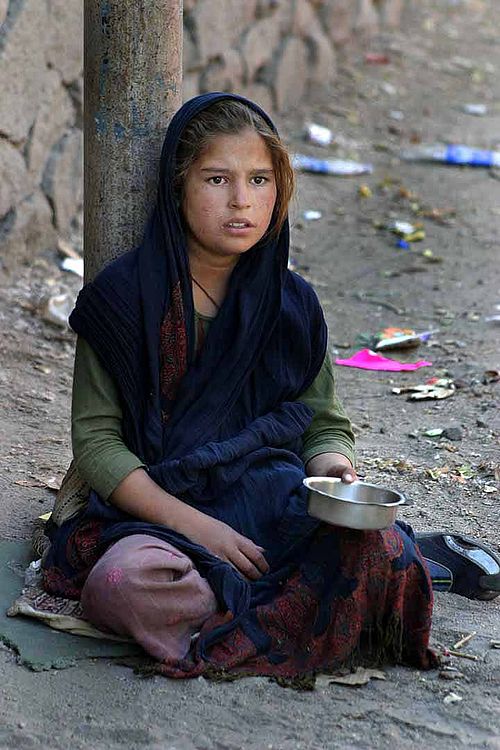
But, that is setting the bar too low! This eliminates masses of people who are in fact very poor and truly need affordable or free food from getting it. Truly bad news!
Here is the reaction of some such people in this wonderful article from Tehalka. The author, tongue in cheek, calls it the new Fortune list where several “rich” Indians (above the ridiculous new poverty line, anyway) respond to the BPL. I hope for good news soon that eliminates such flaws from the upcoming legislation and eventually its implementation.Input is being sought from states and the Supreme Court on addressing various challenges this initiative faces before finalizing the bill.
Key areas that need to be addressed include: food distribution, transparency, corruption, red tape, mismanagement, middle-management – ultimately, is the food reaching all the people it needs to?
In reaction to the bill, numerous leading Indian economists from around the world wrote this joint open letter to Ms. Sonia Gandhi (it was printed in The Economic Times). Truly worth reading, it urges her to adopt specific recommendations particularly about who it covers as well as how the food should be distributed .
Let me repeat, the whole idea of the country wanting to ensure that no citizen goes hungry is truly commendable. It would be great if they would take this commendable goal and turn it into a commendable initiative of excellent execution. It should avoid, at all costs, becoming a half-baked, compromised set of actions that invite well-deserved criticism and censure, while not solving the problem it was designed to address.
If I sound cynical, it is only because current and past governments have a legacy of screwing things up so that the final product does not bear much resemblance to the original objective. This one is such a great objective*, with numerous, overwhelming benefits for the country and its citizens; I am sure that I am not alone in feeling overly apprehensive about the potential for compromise and flawed execution. I just hope that the Government of India can get it right!
:
* btw, I say this is a great objective, even knowing that there is an ulterior political motive of buying votes from the masses with food. Because, ultimately, if done correctly, it really will help the people of this country.
:
Photo: By Steve Evans (Flickr) [CC-BY-2.0 (www.creativecommons.org/licenses/by/2.0)], via Wikimedia Commons

 The Yin and Yang of Life Anywhere