Monthly Archives: November 2011
Indians CAN innovate – just not in India
Let me begin with a paragraph written by Walter Isaacson whose most recent book is the biography of Steve Jobs. He wrote an op-ed piece in the NY Times recently called The Genius of Steve Jobs. He ends his piece like this:
China and India are likely to produce many rigorous analytical thinkers and knowledgeable technologists. But smart and educated people don’t always spawn innovation. America’s advantage, if it continues to have one, will be that it can produce people who are also more creative and imaginative, those who know how to stand at the intersection of the humanities and the sciences. That is the formula for true innovation, as Steve Jobs’s career showed.
I can’t agree more!
But, here’s the thing I want to make clear. There are many innovative Chinese and Indians out there – the sad truth, however, is that most of them are not being innovative in their respective native countries. Countries such as the US are (happily!) reaping the benefits of their inventions and innovations.
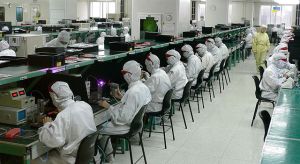
Show me the innovation!
On one of my recent travels, I chatted with a business owner from Bombay. He is successful and ambitious. He sees a clear path for the next level of growth for his company. However, he lamented that he is unable to find the people he needs to foster that growth. People, that is, with initiative and innovation on their minds.
After having been here for a few months, I can attest to this problem being a common occurrence. I have heard it from people at different levels in different companies from various cities across India. What could be the cause of this?
In India, my opinion is that it is the school and work culture that inhibits free thinking, creativity and innovation. The most common symptom exhibited by people here is to follow this dictum-
Do what you are told. Don’t question. Never debate. Just do it!
So, is it any surprise that the natural instinct of Indian workers here is not to innovate? And isn’t that such a sad waste of brain power? These are the same people who have a natural affinity for math and science, but they are simply not taught (forget, encouraged) to invent, think out of the box, take creative license, take risks or live life on the edge sometimes. If they do, they are shot down very quickly – whether by their parents or teachers or colleagues or bosses.
After having spent so many of my working years in the US, I can guarantee you that I would not have survived very long with this type of behavior. I take that back. I definitely would have “survived”. But I would not have evolved or grown – professionally or personally. Moreover, I would have been doing a disservice to the organization where I worked if that was all I was about.

It is important to understand that I am speaking in generalities – there are always exceptions.
In addition, this is relative, not absolute. I am also relating what I see in India with the environment in the US.
The US is by no means perfect – we still have numerous, what Seth Godin would call “cubicle workers”, happy to do just enough and not take any risks by thinking “new or different”. But even compared to this, India is WAY behind, notwithstanding graduates from universities such as the prestigious IITs (Indian Institutes of Technology).
Speaking of IIT, many of its graduates began leaving India for UK, US and Canada for higher studies beginning in the 1960s. Most of them were offered jobs in those countries and stayed on. Those who returned didn’t feel they could fit in because by now they had advanced technological backgrounds, needed to be involved in product creation and design, but found themselves more in product maintenance or support in Indian industry.
This began to change somewhat with liberalization in the 1990s when multi-national companies (MNCs) started setting up shop in India. They saw the cost advantage but also were the first to utilize these high-powered brains for some design and creation.
Now, there appears to be a reverse brain drain in action where IIT graduates are returning to India as entrepreneurs or employees of MNCs. Could they be the first change agents or catalysts to turn around the long-standing Indian culture of “follow the rules and follow my instructions” which has been endemic for decades?
I have so much more to say on this topic that I will save for other posts. A key point to make now, though, is this:
Until that fundamental culture is changed and people are transformed to think differently, the real power of countries such as India will never be unleashed in any field.
Now, that was a rather audacious statement to make. The question is, do you agree? It sure would be great to hear your thoughts (and brickbats, I’m sure).
:
:
Photo Credits:
Factory Workers: By Steve Jurvetson from Menlo Park, USA (glue works Uploaded by Zolo) [CC-BY-2.0 (www.creativecommons.org/licenses/by/2.0)], via Wikimedia Commons
IIT Locations Map from Wikipedia
The Incredible Internet Growth Story – Globally and in India
By the latest internet usage stats that are out there, the USA has a penetration rate of almost 80%. That translates to around 250 million people who live in the US using the internet.

Compared to this statistic, India’s penetration is very low. Mid year, it was under 10%; however this small percentage still translates to some 100 million users. And, as of today’s newspaper, that number is set to rise to 121 million by year end, in just a matter of a few months. What’s more, the year to year growth is significant: 28%+ from 2010 to 2011. So, like all aspects of emerging markets – India got a late start but is looking to make up for it with phenomenal growth rates to catch up with the developed world. This is quite similar to what is happening in the domain of mobile communications.

The computer that Tim Berners-Lee used to invent the World Wide Web at CERN in 1980
Worldwide, according to industry analysts, there were over 2 billion internet users by March 2011. Consider that this number was minimal just a few years ago and non-existent right before that! And consider this too: there were only around 350 million internet users in 2000. That’s about two-thirds of the size of Facebook users today!
Pingdom conducted an interesting thought experiment (definitely worth reading!) on the hypothetical case of what internet usage would be like if all countries had a similar penetration as the US, which was taken as the base. If this were to happen, China would have over a billion users (versus 425 million today) and India would have close to one billion users (versus 100 million today).
While this is hypothetical, it’s really not impossible to imagine this growth and these numbers. It’s going to happen someday, and if you go by the historical trend, the pace of change will be exponential, not linear.

Not to be left out of the growth game in emerging markets, last week Google India announced free websites (for one year) to Indian businesses. Consider that of an estimated 8 million small/medium businesses in the country, only 5% have websites. Google’s objective is to get 500,000 businesses up and running with a website over the next three years. Smart move! As usual.
It will be silly for SMBs to not take advantage of this offer. And one thing I can guarantee you, there are very few silly Indian business owners around. 🙂

What all these mind-boggling numbers mean is that there will be a paradigm shift in virtually everything people here do – how they live and how they run their businesses. It means that they will need to rethink their supply chain model, their marketing and sales, how they compete, how they attract customers – not to mention how they live their lives, how and when they communicate with family and friends, how they plan their vacations, how they choose what to buy, who their service providers are….just about everything.
Of course, these changes are underway today already – but truly only for a fraction of the population. The next paradigm shift will occur due to the sheer mind-boggling numbers and the major momentum this will create.
Count yourself lucky because we definitely live in such interesting times. I would go so far as to say these are the most interesting times in the history of the world – a time where everything is getting transformed due to the absolute connected-ness and accessibility in our world.
Look back at how things were ten, five and even just two years ago; such a look back demonstrates the dramatic pace of change that the internet has shaped. So, just think of the future – where the pace of progress and change is only going to increase substantially. This will truly be a momentous time – offering fresh, new (and sometimes wild!) prospects of living and livelihood to all of us.
So brace yourself for an even more thrilling ride, wherever in the world you live – but more importantly, plan to make the most of it!
:
Photo Credits:
Internet Sign: I, Cawi2001 [CC-BY-SA-2.5 (www.creativecommons.org/licenses/by-sa/2.5)], via Wikimedia Commons
World Internet Hosts Graph: By Ken Masters (Own work) [CC-BY-SA-3.0 (www.creativecommons.org/licenses/by-sa/3.0)], via Wikimedia Commons
Tim Berner Lee’s Computer:By Robert Scoble from Half Moon Bay, USA [CC-BY-2.0 (www.creativecommons.org/licenses/by/2.0)], via Wikimedia Commons
Internet Cafe Sign By: Justinc {{cc-by-sa-2.0}}Category:Neon signs Category:User:Justinc )

 The Yin and Yang of Life Anywhere