Yearly Archives: 2011
Obama to Congress – Create New Jobs Right Now!
As I watched (a replay of) President Obama’s speech to Congress a couple of days ago, I found myself really missing and yearning for the great US of A.
For the past few months, I have been fairly immersed in and preoccupied with my new life in Mumbai. Politics in India, and the Anna Hazare movement have kept me enthralled. I have been a bit disassociated with the happenings in the US except via the various internet news sources that I scan and sometimes scrutinize. Location does matter after all. Similarly, I would not have been so engrossed in matters relating to India while in the US.
All this garbage about global this and global that, and the connected world is all well and good, and yes, today we are so much more connected than ever before, but let’s not mislead ourselves. Where we physically are present is where we pay the most attention. When that changes, you can assume that virtual reality has become…well, a reality.

Not that I am biased or anything (!), but it was great to hear President Obama sound like candidate Obama once again. His speech has been described as feisty and bold (by supporters, of course). Even Paul Krugman who has been quite critical of Obama’s compromises, had reluctant admiration and appeared to be pleasantly surprised about the solid content of the American Jobs Bill that he announced.
The Bill makes so much sense! The US desperately needs jobs. It also needs better schools and better infrastructure, not to mention needing businesses – small and big – to hire again. The tax cut incentives will help that program. Plus, parts of the proposed $447 billion jobs package have had bipartisan support in the past. Sure sounds like a win-win-win (to the naive at heart).
In fact, the Bill makes so much sense (it has been written in a way that pays for itself by taxing the wealthiest individuals and corporations – is that fair or not?), that I worry that it just won’t pass through the current ultra partisan politics – demonstrated so vividly during the debates about raising the debt ceiling.
After all, which Republican wants to see Obama succeed with this initiative, given that there are only 14 months left until the next election? These partisan politics instead of helping that country rebuild its core strengths are working to make them disintegrate bit by bit. What a sad state of affairs, where politics trumps people and the nation!
Funny/sad too how, today, so many nations are each going through their own independent and unique crises. One can only hope that they – whether it’s the US or India or any other country – will emerge better and stronger, without too much collateral damage, as they fight their way through their messes.
Come to think of it, which are those special countries not currently undergoing large scale crises? Canada and Switzerland maybe? Must be nice indeed.
Meanwhile, despite my misgivings, I will wait with bated breath to see if Congress does the right thing on the American Jobs Bill. I would welcome returning some day to live in a much stronger America than the one I left, in the midst of its severe economic calamity.
Two More Wins for Bihar (that’s right, BIHAR)
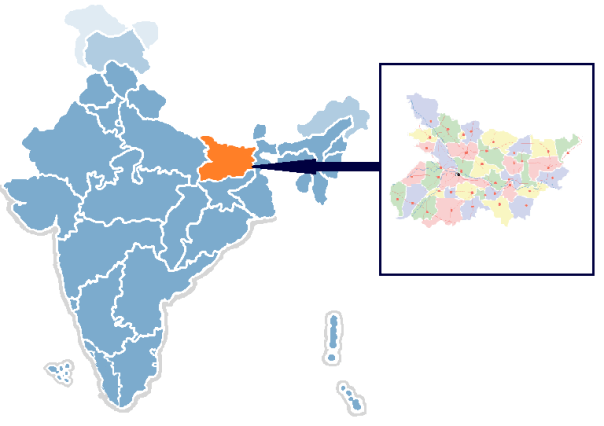
Bihar continues to surprise
Just when I thought it cannot get better, I find out something new that is fascinating. Trust me, if anyone told me that as an US expat in India, specifically Mumbai, I would be writing about some backward northeastern state – not once, not twice, but three times in the span of a few months, I would have said you were crazy. Bihar is not exciting. I have only been there the one time, and while that visit was a fun-filled one, it did not give me any illusions about the state.
Frankly, for me to write about it at all, you better believe that it is because of something extraordinary or innovative or unusual or amazing. That’s why, I hope you read on about what I consider Bihar’s “wins”.
Win #1: From Loot to Schools
Over the weekend, the government of Bihar seized the mansion of a government IAS officer who is accused of corruption. This has been happening in the state whenever an official’s assets are disproportionate with respect to his sources of income (as I had written earlier). Yesterday’s paper talked about this house (worth some $1.25 million) being illegally acquired through bribes; the plans are to now turn this into a school. Bold move! And what a statement-making one to all the others who might be thinking of taking a bribe. It says:
1. Don’t fool yourself, this government is very serious
2. If you take a bribe, you will pay for it dearly
3. Not just monetarily, but in full view of the public
4. Therefore, just DON’T do it.
Setting an example can’t get more sharp and resounding than that! It is expected that this would be the start of Bihar’s Chief Minister fulfilling his promise of converting illegal properties into much-needed schools in the State. Simply brilliant.
Win #2: Basic Rights. Delivered On Time.
 On August 15th of this year – Independence Day for India, the government of Bihar introduced a new act – the Right to Public Services (RTPS) Act. Implemented both online as well as manual (where online is not available yet), a citizen can expect mandated services in a timely manner.
Yes, I know this would be a standard expectation from any government. But this is India, and that has never been the case. To get anything, you have to run around the block a few times, then grease some palms, and then maybe you will receive what was your due all this time – after a long wait.
The ultimate stated objective of the State: Transform governance within Bihar
The objectives of RTPS: Be transparent; deliver essential services to people efficiently.
A crucial, beneficial side-effect: Curb and/or eliminate corruption
Services – anything from getting a ration card to registering a property deed, would have to be provided in a stipulated time. For example, say getting a ration card will take 10 days (this is just an example, but specifics such as this are provided to the public). It is the responsibility of the named official to provide this service within that 10 day time period. In case this does not happen, the citizen can appeal to two different named levels both for correction and to issue penalties to the officer.
 In the initial phase, RTPS covers some 50 services to citizens from 10 different departments. Just during the first two days after activation, there were some 40,000 applications received across Bihar. Within five days, as of August 20th, the number of applications swelled to 280,000! This clearly showed the pent-up demand and expectation of people. An idea whose time has obviously arrived!
RTPS – the why and how – was yet another superb brainchild of Chief Minister Extraordinaire Nitish Kumar. Since June, he has been promoting it widely through a series of advertisements across the state. Even better, check out this facebook page for Right to Public Services! The main website is here.
Undoubtedly, there will be some pain during the initial execution, but what a great move by the state government.
Could this state known for its sluggishness in the past, turn out to be a model for others across India? Indeed, it could!
Win #3 (Bonus): He’s the Man
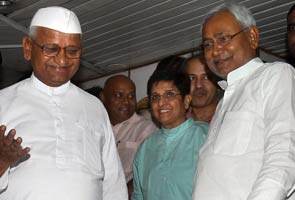 Last month, Chief Minister Nitish Kumar stated that RTPS was another way to curb rampant corruption at the State level.
He then asked the Anna Hazare team to help draft a Lokayukta (State level ombudsman being proposed as part of Jan Lokpal) for Bihar that covers the Chief Minister as part of its scope.
I am full of admiration for this leader! All I can say is that India could use a few (!) more Chief Ministers and political leaders like Nitish Kumar. Indeed, that is what voters and political parties alike should aspire for!
Credentials for the job:
- Honesty and transparency
- Political will and savvy
- Strong beliefs about service to and uplifting of people
- Bold action and solid execution to turn these beliefs into reality
:
Frankly, I believe he is really Bihar’s biggest win. Lucky Bihar.
:
Map of India: By Created by user:Maverick.Mohit.Maverick.Mohit at en.wikipedia [GFDL (www.gnu.org/copyleft/fdl.html) or CC-BY-SA-3.0 (www.creativecommons.org/licenses/by-sa/3.0)], from Wikimedia Commons

 The Yin and Yang of Life Anywhere