Category Archives: people
Apparently, we are all liars :-)
I don’t even pretend to read every word in the newspapers here, but there are some columns that I catch whenever I can. Kind of like I do with some of the opinion columns of the NY Times – Doud, Collins, Friedman, Krugman…what, you didn’t know I was a liberal at heart? 🙂
In the Indian newspapers, I like to read Shobha De, Santhosh Desai and Pritish Nandy. Chetan Bhagat can be insightful sometimes and not so much other times but net-net it’s usually not a loss. The monsoons in Mumbai are making my commutes long drawn out expeditions these days, whether it is raining or not (why is that?). Therefore, I have more time than usual to read the newspapers (still a hard-copy paper habit here).
It Started With One, Little Newspaper Column
A recent column caught my attention – by Pritish Nandy, who has a knack for courting controversy (that’s what makes him so interesting), it was called The Magic of the Lie. A good read, his opinion was as usual riddled with contention and irony.
His premise is simple – humans lie – they always have, and they always will.
His second premise is that there is a very good reason for all this lying. We don’t tell the truth because the truth is hard, and lies give us something good to believe in, as in –
“Lies are an integral part of our survival strategy. They are what make this world go round.”
He supports this premise with a sampling of historical, political, professional, religious, personal and relationship lies. Here’s an example –
“The calculus of all faith is a lie. The history we read is often a lie. It’s almost entirely documented by court historians hired by ruling dynasties to make them look good.. So their crimes are glossed over. The ugliness is airbrushed. So is the wanton bloodshed and brutality.
Much of what we call civilisation is a lie created to defend what is actually colonisation of the mind. Most nations are born out of carnage and tears. Yet we create new mythologies that lend a purpose to our sense of nationhood.”

Next Stop: Research in Psychology
Of course I had to check up on these declarations to see how large his B.S. element and entertainment factor was. And lo and behold, I found a treasure trove of articles and opinions on humans and lies. I’m not sure you are all ready for this. Think you can you handle it?
One good article I found was Why We Lie, easy to read and absorb while backed up by some serious research in psychology. It doesn’t even question the premise that we lie but just goes on to explain why we do it. Why do we do it?
“It boils down to the shifting sands of the self and trying to look good both to ourselves and others, experts say.”
…”Many animals engage in deception, or deliberately misleading another, but only humans are wired to deceive both themselves and others, researchers say. “
…”The study, published in the Journal of Basic and Applied Psychology, found that 60 percent of people had lied at least once during the 10-minute conversation…
“People almost lie reflexively,” Feldman says. “They don’t think about it as part of their normal social discourse.” But it is, the research showed.
…”We want to be agreeable, to make the social situation smoother or easier, and to avoid insulting others through disagreement or discord.”
So now you know.
And for a bit of a lesson in morality (from the same article):

:
“Not all lies are harmful.
In fact, sometimes lying is the best approach for protecting privacy and ourselves and others from malice, some researchers say.
Some deception, such as boasting and lies in the name of tact and politeness, can be classified as less than serious.
But bald-faced lies (whether they involve leaving out the truth or putting in something false), are harmful, as they corrode trust and intimacy—the glue of society.”
:
Yikes! Enough already!!! Now, back to what I started out with –
Nandy’s short post is an entertaining read. He’s even made it seem quite believable in parts. (It seems he may be on to something after all).
I can tell you more, but why don’t you just go read it? It’s short, it’s worth it and it’s only one click away…
Do come back and tell me what you think, one liar to another. 🙂
To An eBook On Nothing But…
Wait! I’m not done.
Since I started at one place and as usual, meandered along to a couple more, I had to mention where this quest led me – to this ebook by best-selling author and neuroscientist, Sam Harris. It’s called (are you ready?) – Lying.
His premise? Since I know that only about .000001% of you will click on this link to find out more, here’s something that will (maybe) make you check it out –
 “In Lying, bestselling author and neuroscientist Sam Harris argues that we can radically simplify our lives and improve society by merely telling the truth in situations where others often lie.
He focuses on “white” lies—those lies we tell for the purpose of sparing people discomfort—for these are the lies that most often tempt us. And they tend to be the only lies that good people tell while imagining that they are being good in the process”.
The book itself is short (the author calls it an essay and it can be read in less than an hour) but is packed with great advice. More than bald-faced lies, it really sheds any false beliefs about the ‘goodness quotient’ that people tend to apply to white lies – those lies that are told because you tell yourself you don’t want to hurt the person you are talking to.
Who is not guilty of a white lie…or a few? We tell ourselves that we are doing it to be kind, to do good, blah, blah, blah…
Contrary to the article above, Harris puts an emphasis on the importance of not giving into the comfort and ease of white lies with an assertion that they can be just as damaging as the other kind.
Possibly one of the best, most powerful (and yet such a simple) takeaway from this book is this:
Honesty is a gift we can give to others. It is also a source of power and an engine of simplicity. Knowing that we will attempt to tell the truth, no matter what the circumstances, leaves us with little to prepare for. We can simply be ourselves.
Just because, as Mr. Nandy claims, everyone in the world is (consciously or not) lying, doesn’t mean you have to!
And Finally That Famous Indian Story
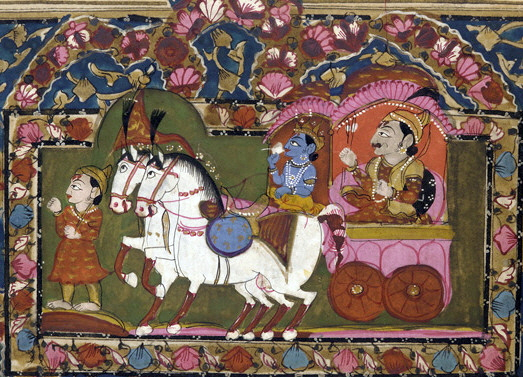
And last but not least, in support of Nandy, one only has to turn to the complex stories that are part of a famous Indian epic.
How much do you know about the deceit that embroils so many characters and stories of Mahabharata? Take for example the story of Drona and the crafty deceit involved in killing him – positively Machiavellian! Just one of the many, wondrous, intricate, interwoven stories of this famed epic from India. It tells you a lot about human (and godly!) nature, and would not have been the epic that it is without…lies.
 :
:
Really, Mr. Nandy, look what you started now!
:
:
:
:
A Book about Mumbai Takes its Toll On Me
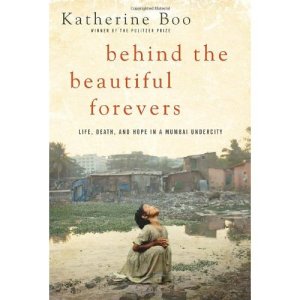
Deeply insightful. Thoroughly painful. That’s how it was reading Katherine Boo’s acclaimed book, Behind the Beautiful Forevers: Life, Death, and Hope in a Mumbai Undercity.
You know how it happens? A friend recommends a book and soon after that someone else mentions the same book, and then it becomes a must-read.
When I first started on it, I knew nothing more than that it was set in Mumbai.
It turns out that it is actually set in a Mumbai slum. I was half way through reading the book and it was touching me fiercely when I decided to look it up and see what else I could find out about the author and her writing.
To my utter shock I discovered that this was a non-fiction book. Until then, I was reading it as fiction. Even so, it was a painful read. Immensely painful. Can you imagine how I felt when I discovered that this was really non-fiction?
The Mumbai slum has played a major character is a couple of famous books and movies. The most well known book (until now) is Shantaram – a must-read for sure. And, of course among movies, there’s the much admired, equally criticized Slumdog Millionaire, which took the Mumbai slums to a new level of fame, adulation and fortune.
For those who have read Shantaram (for those who haven’t, I do feel sorry for you…) I’m sure you can easily recall some of the unforgettable images that his writing sketched for us – of his life in the underbelly of Mumbai, including the phases that he spent living in its slums.
It is a fascinating story with so many colorful characters and incredible episodes that sometimes it just made you stop, take a deep breath and say, “is this for real?” Well, let me tell you, that even with all that was remarkable in Shantaram, when compared to Boo’s book, that feels more like an adventure of the lighter kind. (Well, not exactly ‘light’, but you get my point).
And then when I discovered that Boo was writing non-fiction, I almost did not pick up the book again. These were not characters in a story created from an author’s imagination, these were real people, real lives!
Her intense descriptions of a few families, their unfortunate lives trying to make enough to eat and live while dealing with the scourge of corruption (in that state of poverty!) and yes, their hopes are so vivid, that they affect you deeply. I won’t lie – it was painful and harrowing. The inequality, the injustice and the fight for some of the most basic of human needs for people in the slums is beyond tragic. And all too real!
These fact-based stories and lives seeped into me, making themselves felt strongly, refusing to leave me and my mind alone, as much as I tried to chase them away.
In all ways that I can think of, it is a brilliantly written book. Certainly it’s one which bears a weighty theme, and for the reasons mentioned above, it’s not an easy one to recommend that you read. Personally, I am torn.
Here are a couple of excerpts that I had to share, the first a quote from a boy from the Annawadi slums:
“For some time I tried to keep the ice inside me from melting,” was how he put it. “But now I’m just becoming dirty water, like everyone else. I tell Allah I love Him immensely. But I tell Him I cannot be better, because of how the world is.”
….Abdul’s father had developed an irritating habit of talking about the future as if it were a bus: “It’s moving past and you think you’re going to miss it but then you say, wait, maybe I won’t miss it – I just have to run faster than I’ve ever run before. Only now we’re all tired and damaged so how fast can we really run? You have to try to catch it, even when you know you’re not going to catch it, when maybe it’s better just to let it go –“
And here are excerpts from the author’s note:
….Although I had no pretense that I could judge a whole by a sliver, I thought it would be useful to follow the inhabitants of a single, unexceptional slum over the course of several years to see who got ahead and who didn’t, and why, as India prospered.
….The events recounted in the preceding are real, as are all the names.
….In the age of globalization – an ad hoc, temp-job, fiercely competitive age – hope is not a fiction. Extreme poverty is being alleviated gradually, unevenly, nonetheless significantly.
….Too often, weak government intensifies it and proves better at nourishing corruption than human capability.
….In places where government priorities and market imperatives create a world so capricious that to help a neighbor is to risk your ability to feed your family, sometimes even your own liberty, the idea of a mutually supportive poor community is demolished. The poor blame one another for the choices of governments and markets, and we who are not poor are ready to blame the poor just as harshly.
….It is easy, from a safe distance, to overlook the fact that in under-cities governed by corruption, where exhausted people vie on scant terrain for very little, it is blisteringly hard to be good. The astonishment is that some people are good and that many people try to be — all those invisible individuals who everyday find themselves faced with dilemmas….
….If the house is crooked and crumbling, and the land on which it sits uneven, is it possible to make anything lie straight?
There’s more info on the author, Pulitzer Prize winner, Katherine Boo on the website for the book, along with deservedly glowing testimonials from its readers (some famous ones).
Have a look around and then decide for yourself if you want to read (no, experience) it. I hope you do, and if you do I know that it will affect you just as deeply while giving you an acute understanding of yet another side of what is quickly becoming for me one of the most ‘interesting’ yin-and-yang cities in the world. Mumbai.
I daresay that this darker side of Mumbai is not contemplated, registered or understood to this level even by most people who live in this very city (the ones who live outside of those slums that they see and pass by each and every day).
As a temporary resident, I am glad to have happened upon a book that shed this kind of light, as heart breaking as it was to travel through some of its stories. While they are still fresh in my mind, no doubt I will be thinking of the Ashas, Abduls, Sunils and Fatimas who live in the next slum that I travel past.
:
:
Photo credits:
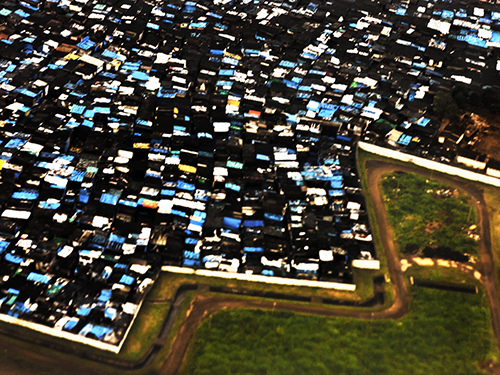
Slums: By Abhisek Sarda from Goa, India (Slums) [CC-BY-2.0 (http://creativecommons.org/licenses/by/2.0)%5D, via Wikimedia Commons

 The Yin and Yang of Life Anywhere