“We live in an age of progress”
You watch TV news or read the daily newspaper, and it’s hard not to get discouraged and depressed by all the ‘bad’ things happening in the world. Right now.
Plus you have people like me, who every now and then need a swift kick in the behind – when there is the slightest threat of us turning into cynics (even temporary ones). I re-read a couple of recent blog posts and decided that I was right there on the edge. That has simply got to stop!
That is why I thought Fareed Zakaria‘s commencement address at Harvard this year was so refreshing. Sometimes, we just need to tell ourselves about the other side – about the good things in this world and this time in our lives.
He called his speech, “We live in an age of progress”. How appropriate.

Since you may not have time or the inclination to read the text of his entire speech, I have done you a big favor (you’re welcome :-)) and listed here the main points that he made (the main points that resonated with me, of course).
To tell you the truth I mostly did this for myself because it gave me the opportunity to go back and re-read what he had said, and to really absorb it. I hope you feel like I did – that these words of wisdom are worth a read.
I have included actual excerpts below. After all, why mess with great material?
First he had this to say:
… you’re likely to hear that we are living through grim economic times, that the graduates are entering the slowest recovery since the Great Depression. The worries are not just economic. Ever since 9/11, we have lived in an age of terror, and our lives remain altered by the fears of future attacks and a future of new threats and dangers. Then there are larger concerns that you hear about: The Earth is warming; we’re running out of water and other vital resources; we have a billion people on the globe trapped in terrible poverty.
So, I want to sketch out for you, perhaps with a little bit of historical context, the world as I see it.
Then, he made these counter-points:
About war and peace:
The world we live in is, first of all, at peace — profoundly at peace. The richest countries of the world are not in geopolitical competition with one another, fighting wars, proxy wars, or even engaging in arms races or “cold wars.” This is a historical rarity. You would have to go back hundreds of years to find a similar period of great power peace.
The number of people who have died as a result of war, civil war, and, yes, terrorism, is down 50 percent this decade from the 1990s. It is down 75 percent from the preceding five decades, the decades of the Cold War, and it is, of course, down 99 percent from the decade before that, which is World War II. Steven Pinker says that we are living in the most peaceful times in human history, and he must be right because he is a Harvard professor.
About economic growth:
Even in the current period of slow growth, keep in mind that the global economy as a whole will grow 10 to 20 percent faster this decade than it did a decade ago, 60 percent faster than it did two decades ago, and five times as fast as it did three decades ago.
About life and death:
Life expectancy across the world has risen dramatically. We gain five hours of life expectancy every day — without even exercising! A third of all the babies born in the developed world this year will live to be 100.
About progress in technology:
Your cellphones have more computing power than the Apollo space capsule. That capsule couldn’t even Tweet! So just imagine the opportunities that lie ahead.
About education:
Look at the number of college graduates globally. It has risen fourfold in the last four decades for men, but it has risen sevenfold for women.
About the voice of women:
If you are wondering whether women are in fact smarter than men, the evidence now is overwhelming: yes. My favorite example of this is a study done over the last 25 years in which it found that female representatives in the House of Congress were able to bring back $49 million more in federal grants than their male counterparts. So it turns out women are better than men even at pork-barrel spending. We can look forward to a world enriched and ennobled by women’s voices.
About America and the future:
I remind you that this is a country that still has the largest and most dynamic economy in the world, that dominates the age of technology, that hosts hundreds of the world’s greatest companies, that houses its largest, deepest capital markets, and that has almost all of the world’s greatest universities. There is no equivalent of Harvard in China or India, nor will there be one for decades, perhaps longer.
About America’s role in the world:
The United States is also a vital society. It is the only country in the industrialized world that is demographically vibrant. We add 3,000,000 people to the country every year. That itself is a powerful life force, and it is made stronger by the fact that so many of these people are immigrants.
They — I should say we — come to this country with aspirations, with hunger, with drive, with determination, and with a fierce love for America. By 2050, America will have a better demographic profile than China. This country has its problems, but I would rather have America’s problems than most any other place in the world.
About rising to challenges:
When I tell you that we live in an age of progress, I am not urging complacency — far from it. We have had daunting challenges over the last 100 years: a depression, two world wars, a Cold War, 9/11, and global economic crisis. But we have overcome them by our response. Human action and human achievement have managed to tackle terrible problems.
We forget our successes. In 2009, the H1N1 virus broke out in Mexico.
…the Mexican health authorities identified the problem early, shared the information with the WHO, learned best practices fast, tracked down where the outbreak began, quarantined people, and vaccinated others.
…The result was that the virus was contained, to the point where, three months later, people wondered what the big fuss was and asked if we had all overreacted. We didn’t overreact; we reacted, we responded, and we solved the problem.
…There are other examples.
…When we can come together, when we cooperate, when we put aside petty differences, the results are astounding.
And about a different perspective
So, when we look at the problems we face — economic crises, terrorism, climate change, resource scarcity — keep in mind that these problems are real, but also that the human reaction and response to them will also be real. We can more easily map out the big problem than the thousands of individual actions governments, firms, organizations, and people will take that will constitute the solution.
…
:
Okay, so this post is much, much more about what Fareed Zakaria had to say than anything I have to say.
But, like I said earlier, why mess with great material?
I have captured most of the high points of his speech. If you are interested in reading all of what he had to say (you should be!), you can read the full text here.
In ending, I reiterate again the title of his speech. It’s something we would do good to remember more often, and especially at times when the daily grind and the bad news media broadcasts combine to hit us the hardest.
Now, repeat after me:
“We live in an age of progress.”
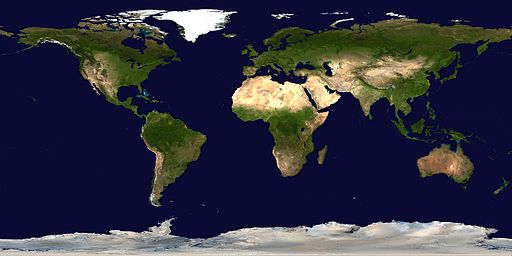
And, oh yeah, thank you Mr. Zakaria!
:
Photo Credits:
Fareed Zakaria: Afternoon Alumni Exercises at Harvard Commencement. Jon Chase/Harvard Staff Photographer
A Book about Mumbai Takes its Toll On Me

Deeply insightful. Thoroughly painful. That’s how it was reading Katherine Boo’s acclaimed book, Behind the Beautiful Forevers: Life, Death, and Hope in a Mumbai Undercity.
You know how it happens? A friend recommends a book and soon after that someone else mentions the same book, and then it becomes a must-read.
When I first started on it, I knew nothing more than that it was set in Mumbai.
It turns out that it is actually set in a Mumbai slum. I was half way through reading the book and it was touching me fiercely when I decided to look it up and see what else I could find out about the author and her writing.
To my utter shock I discovered that this was a non-fiction book. Until then, I was reading it as fiction. Even so, it was a painful read. Immensely painful. Can you imagine how I felt when I discovered that this was really non-fiction?
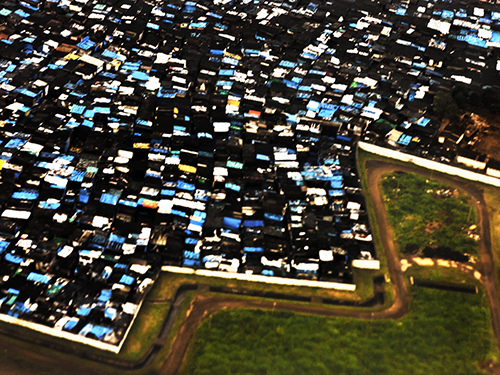
The Mumbai slum has played a major character is a couple of famous books and movies. The most well known book (until now) is Shantaram – a must-read for sure. And, of course among movies, there’s the much admired, equally criticized Slumdog Millionaire, which took the Mumbai slums to a new level of fame, adulation and fortune.
For those who have read Shantaram (for those who haven’t, I do feel sorry for you…) I’m sure you can easily recall some of the unforgettable images that his writing sketched for us – of his life in the underbelly of Mumbai, including the phases that he spent living in its slums.
It is a fascinating story with so many colorful characters and incredible episodes that sometimes it just made you stop, take a deep breath and say, “is this for real?” Well, let me tell you, that even with all that was remarkable in Shantaram, when compared to Boo’s book, that feels more like an adventure of the lighter kind. (Well, not exactly ‘light’, but you get my point).
And then when I discovered that Boo was writing non-fiction, I almost did not pick up the book again. These were not characters in a story created from an author’s imagination, these were real people, real lives!
Her intense descriptions of a few families, their unfortunate lives trying to make enough to eat and live while dealing with the scourge of corruption (in that state of poverty!) and yes, their hopes are so vivid, that they affect you deeply. I won’t lie – it was painful and harrowing. The inequality, the injustice and the fight for some of the most basic of human needs for people in the slums is beyond tragic. And all too real!
These fact-based stories and lives seeped into me, making themselves felt strongly, refusing to leave me and my mind alone, as much as I tried to chase them away.
In all ways that I can think of, it is a brilliantly written book. Certainly it’s one which bears a weighty theme, and for the reasons mentioned above, it’s not an easy one to recommend that you read. Personally, I am torn.
Here are a couple of excerpts that I had to share, the first a quote from a boy from the Annawadi slums:
“For some time I tried to keep the ice inside me from melting,” was how he put it. “But now I’m just becoming dirty water, like everyone else. I tell Allah I love Him immensely. But I tell Him I cannot be better, because of how the world is.”
….Abdul’s father had developed an irritating habit of talking about the future as if it were a bus: “It’s moving past and you think you’re going to miss it but then you say, wait, maybe I won’t miss it – I just have to run faster than I’ve ever run before. Only now we’re all tired and damaged so how fast can we really run? You have to try to catch it, even when you know you’re not going to catch it, when maybe it’s better just to let it go –“
And here are excerpts from the author’s note:
….Although I had no pretense that I could judge a whole by a sliver, I thought it would be useful to follow the inhabitants of a single, unexceptional slum over the course of several years to see who got ahead and who didn’t, and why, as India prospered.
….The events recounted in the preceding are real, as are all the names.
….In the age of globalization – an ad hoc, temp-job, fiercely competitive age – hope is not a fiction. Extreme poverty is being alleviated gradually, unevenly, nonetheless significantly.
….Too often, weak government intensifies it and proves better at nourishing corruption than human capability.
….In places where government priorities and market imperatives create a world so capricious that to help a neighbor is to risk your ability to feed your family, sometimes even your own liberty, the idea of a mutually supportive poor community is demolished. The poor blame one another for the choices of governments and markets, and we who are not poor are ready to blame the poor just as harshly.
….It is easy, from a safe distance, to overlook the fact that in under-cities governed by corruption, where exhausted people vie on scant terrain for very little, it is blisteringly hard to be good. The astonishment is that some people are good and that many people try to be — all those invisible individuals who everyday find themselves faced with dilemmas….
….If the house is crooked and crumbling, and the land on which it sits uneven, is it possible to make anything lie straight?
There’s more info on the author, Pulitzer Prize winner, Katherine Boo on the website for the book, along with deservedly glowing testimonials from its readers (some famous ones).
Have a look around and then decide for yourself if you want to read (no, experience) it. I hope you do, and if you do I know that it will affect you just as deeply while giving you an acute understanding of yet another side of what is quickly becoming for me one of the most ‘interesting’ yin-and-yang cities in the world. Mumbai.
I daresay that this darker side of Mumbai is not contemplated, registered or understood to this level even by most people who live in this very city (the ones who live outside of those slums that they see and pass by each and every day).
As a temporary resident, I am glad to have happened upon a book that shed this kind of light, as heart breaking as it was to travel through some of its stories. While they are still fresh in my mind, no doubt I will be thinking of the Ashas, Abduls, Sunils and Fatimas who live in the next slum that I travel past.
:
:
Photo credits:
Slums: By Abhisek Sarda from Goa, India (Slums) [CC-BY-2.0 (http://creativecommons.org/licenses/by/2.0)%5D, via Wikimedia Commons

 The Yin and Yang of Life Anywhere