Monthly Archives: October 2012
The Amul Magic
Cheese and Childhood Memories

I love cheese!
All kinds of cheese – brie, provolone, goat, blue, parmesan, mild cheddar, extra sharp cheddar, gouda, mozzarella….and on and on and on, from the mundane to the exotic ones.
There are thousands of varieties of cheese to enjoy and I must have tried a couple of hundred of them in my adult years. I think it’s fair to say I’ve enjoyed virtually every single one that I have tried. For someone who ranks smelly old blue cheese at the top, you better believe it!
But the story of my childhood and cheese is very different indeed.
There was only one type of cheese that I can remember ever eating when I was growing up in India. Amul Cheese.

Cheese simply meant Amul then. Nothing else.
[Any reader from outside India no doubt doesn’t have a clue what I am talking about! It’s okay. That’s a story for another day].
I did not fully understand the back story of Amul until fairly recently.
As I was digging up everything and anything to do with innovation in India, it did not take long for me to figure out that although innovation in India is not abundant, Amul could be safely categorized as innovative, and further as one of the top, most successful business innovations that came out of this country.
The White Revolution

The great man behind the huge success of this innovation, Dr. Verghese Kurien, died very recently at age 90, after having lived a rich and fruitful life.
He is touted as the father of India’s “white revolution”. This is my homage to him.
So just what did Dr. Kurien accomplish?
Just before India became independent, many milk producers in the state of Gujarat began a protest against unfair practices by middlemen where they were losing their fair share of the business.
To address that problem, a milk co-operative (Gujarat Co-operative Milk Marketing Federation Ltd. – GCMMF) was ultimately created eliminating the middlemen –
…of the farmer, by the farmer, for the farmer.
Dr. Kurien founded it and was credited with its ultimate success. Most people only know it by the brand Amul that stands front and center.
Today, this is the largest food marketing organization in the country.
On the procurement side, it purchases milk from 3.1 million milk producers.
From village cooperative to district to state level cooperative, this chain works!
On the distribution end, the resultant milk products are sold under the Amul brand to millions of Indian consumers.
Amul By The Amazing Numbers
Numbers tell the story once again. Starting in Gujarat with 2 village co-ops and a mere 250 litres of milk, today the state boasts –
- 3.1 million milk producer member families
- 15,760 village societies
- 9.4 million liters of milk procured per day
- US$2.84 million disbursed in cash daily
- GCMMF is the largest cooperative business of small producers with an annual turnover of US$2.5 billion
As a result, other states (22 in all, including Gujarat) have followed the model with success. Overall, here are the numbers for all the milk cooperatives across the country:
- 177 cooperative diary unions
- 145,000 dairy co-ops
- 15 million farmers
- 190 dairy processing plants spread across India
- 23 million kilograms of milk collected per day
The Amul model has helped India to emerge as the largest milk producer in the world.
Impact Felt Everywhere
Milk production multiplied over the years providing great economic benefit to the rural areas. Of particular importance is that these dairy cooperatives have been responsible in uplifting the social and economic status of women in particular as women take this on as their primary vocation while men are busy with their agriculture. This has also provided a definite source of income to the women leading to their economic emancipation.
Milk consumption more than doubled providing excellent health and nutritional benefits to people
Now, that’s what I call a success story! The supply chain success and the distribution chain success. All ultimately owned by the farmers.
There are very few industries in India that can say the same about providing such vast benefits to such broad swathes of the population.
There is a fitting tribute to Dr.Kurien in The Economist. Here is an excerpt of how he worked to empower the poor –
This was democracy: producers running everything themselves, the selling, the processing and, most of all, the marketing.
Empowerment of the rural poor was his real aim, and milk merely the best tool available.
Utterly, Butterly Amul
Lest we forget – along the way, Amul picked an absolute winner of a marketing campaign and mascot. [You can read the story of Amul’s 4000 utterly butterly ads here].
Amul continues to produce its mischievous, tongue-in-cheek “hits” today – always good for a chuckle. Let me end with a couple of recent ones –


And a poignant tribute to the founder on his passing earlier this year-

:
Finally, according to its website:
The Amul brand is not only a product, but also a movement. It is in one way, the representation of the economic freedom of farmers. It has given farmers the courage to dream. To hope. To live.
This is the awesome story behind the Amul cheese that I loved as a kid. What a beautiful back story and reality it is!
:
:
:
Photo Credits:
Cheese:By Eva K. / Eva K. (Eva K. / Eva K.) [GFDL 1.2 (http://www.gnu.org/licenses/old-licenses/fdl-1.2.html) or FAL], via Wikimedia Commons
Verghese Kurien: By Jogytmathew [CC-BY-SA-3.0 (http://creativecommons.org/licenses/by-sa/3.0)%5D, via Wikimedia Commons
Amul logo and Amul hits: Courtesy http://www.amul.com.
Outsourcing – Good or Bad, It’s Here to Stay
The U.S. View
I don’t think even President Obama believes what he says when he talks about outsourcing being bad for the U.S. But it’s good politics, especially at this critical time in his career. So, he’s forgiven.
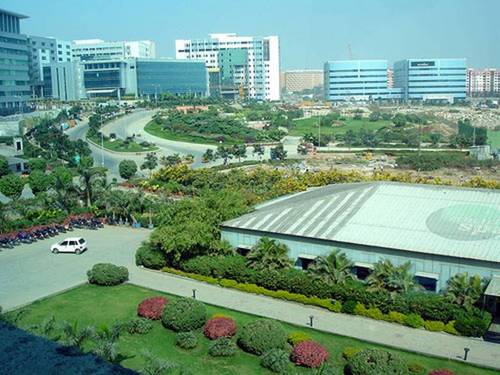
If there’s one area where India has truly excelled and can attest to a fantastic success story, it is how the country has embraced and grown it’s information technology (IT) and business process outsourcing (BPO) industries over the last two decades.
In the late 1980’s, it started taking tentative steps with a few American software companies experimenting with setting up offshore offices to execute software projects. During the anticipated Y2k “crisis” (remember?), the effort burgeoned as India took advantage of the need of the hour, the world’s potential problems with addressing the year 2000 in all existing software programs.

India – The IT Outsourcing Powerhouse
From virtually nothing, today India is a $100 billion dollar IT powerhouse (with year-to-year growth of a whopping 17%). $69 billion of that is for software and services outsourcing. It leads all other countries including China and the Eastern European bloc of nations in this business.
The growth has been rapid and exponential, and sees no sign of stopping, despite what U.S. Presidential candidates may say. It makes up 7.5 percent of India’s GDP which is impressive indeed. In comparison, the largest contributor to GDP is agriculture, India’s traditional, centuries-old stronghold at 17.2%. That says something about the rapid pace of growth. Last year, IT-BPO Services direct employment was provided to 2.8 million people with indirect employment provided to an estimated 8.9 million.
This growth has been so tremendous because it makes such good business sense. Why else would virtually every U.S. software house – mega or not – make such huge bets and investments?
Combine global connectivity, increasing bandwidth, abundantly available technical skills, widely spoken English and lower cost labor – and it would be hard to screw up this business model. Even for India. 🙂
It’s wonderful to see it thrive, with no end in sight.
Numbers Tell the Story
Just as Indian outsourcing companies have grown incredibly large, all the major international (mostly American) software houses have thousands of employees who are now based in India working on product development and software services of all kinds.
Here are a few of the examples of the top IT companies in India with a rough count of number of employees they have in India. This count is primarily of offshore workers, not those who are supporting domestic Indian business.
- TCS (Tata Consultancy Services) – 203,000 employees
- Wipro – 136,000
- Cognizant – 145,000
- Infosys – 151,000
- IBM Global Services – 90,000 [1 out of every 5 IBM total employees is in India]
- HP (HP Labs) – est 30,000
On a recent visit to India, Meg Whitman, CEO of HP, had this to say – “We are not reducing our workforce in India. We have announced a global workforce reduction, but India will stay largely intact, because we not only have all our business units here, but also our R&D and back office. We are focused on keeping our workforce here, and I think over time, probably increase the workforce.”

Other well-known software houses with thousands of employees in India include –
- Cap Gemini – 37,000
- Oracle – estimated from 15000 to 20000
- Microsoft – estimated from 7000 to 10000
- Yahoo
- eBay/Paypal
- Accenture
- CSC
- Intel
- and on and on and on.
Good or Bad?
While this has been great for the Indian economy and growth story – one of the few undisputed success stories for the country, there are many reasons why outsourcing should not be a bad word for the United States either.
A paper from the Center for Economic Performance called Immigration, Offshoring and American Jobs makes the case that even though people in the US lost jobs due to outsourcing, the cost savings from outsourcing made it possible for more people to be hired than were laid off. The study looked at some 60 American industries over several years, from 2000 to 2007. Here are some of the findings:
As offshore workers become available at better tasks, efficiency increases. This gives the onshore workers the opportunity to specialize in different tasks – ones where they exhibit their own relative advantage to do with specific skills. The productivity effect that results from this improved task assignment may in fact offset the displacement effect of offshoring.
This is a theoretical discussion really.
Whether or not this is ultimately good for the U.S. or not is yet to be figured out.
But the thing is that this is a runaway train that is not going to stop. India is going to get better and better at outsourcing, going from the mundane tasks to the increasingly creative ones.

From Engineering Outsourcing to…Marketing?
Outsourcing is boasting an ever expanding range of skills.
From mere software maintenance, to software development and engineering, we now see the even more creative side of outsourcing popping up. Creative, as in digital marketing, for example.
I recently hired a company in India to do a comprehensive re-design for a U.S. based company’s website.
Soon after the new site was launched, a seasoned marketing/creative professional (based in the US) sent me a message congratulating me on the new site. He wanted to know who had done the work since the design was so good and really did a great job of building our brand.
Well, I had hired an India-based web design firm to do the work. I didn’t have the heart to tell him where the agency was based or how much I had paid for the work (I would guess it was 20% or less of what I would have paid in the U.S.). Or that the entire experience had been awesome.
How to Live With It in the U.S.
Like I said, this horse has left the barn. Now, both countries need to work together to harmonize this relationship so that it is indeed a win-win for both. It’s already a win for India.
It is up for debate whether it is a win for U.S. Therefore, it would be especially beneficial for the U.S. to start a discussion and create a strategy to ensure that it does turn into an undisputed win there too.
There is one clear way for America to win and create new jobs.
Instead of being threatened by outsourcing, it can be made into a non-issue where American job losses are concerned. Its attitude should be –
“Dear India and other countries of the world,
We have all these jobs to do, jobs which we basically invented. We’ll teach you how to do them, go do them at a lower price for us so we can build great products, increase our profits and go off to invent new ones.
Thank you.
The United States of America”.
So that’s the secret sauce for new jobs in America. This is where the saved costs can be invested – to create a whole new set of jobs for America. Not an overnight solution but the only real long-term strategy for the U.S.
It is by galvanizing U.S. industry in that one, single area where it has always been the world’s trailblazer:
INNOVATION

:
Photo credits:
Hitech city: By Srisez (Own work) [CC-BY-SA-3.0 (http://creativecommons.org/licenses/by-sa/3.0)%5D, via Wikimedia Commons
Bangalore High Tech Park: By Amol.Gaitonde (Own work) [CC-BY-SA-3.0 (http://creativecommons.org/licenses/by-sa/3.0)%5D, via Wikimedia Commons

 The Yin and Yang of Life Anywhere